Lowther Primary School
Nursery
Lowther Nursery is fully integrated within the Foundation Stage of the school.
At Lowther Nursery we help children to become enthusiastic and confident learners.
Play is central to the way young children learn and through their experiences in the Nursery they are developing skills and knowledge which are the foundations for all later learning.
When your child is 2 years old you can put their name on the waiting list. They are admitted as soon after their 3rd birthday as possible.
We have two separate sessions daily, each with a maximum of 26 places.
We also offer a number of limited places for children to attend from 8.45am to 3.30pm. Please see further information below.
"The Foundation Stage provides a secure and stimulating environment for young children. Standards of care are high, children are welcomed."
"Home and school are brought together to provide a consistent approach to children’s development."
Nursery Operating Hours
Morning session: 8.45am - 11.45am
Afternoon session: 12.30pm – 3.30pm
Lowther Nursery 'Settling in Phase'
At Lowther we want to make the transition into school as smooth as possible. We believe that the best way to settle your children into school life is to stagger their entry over a three week period. This works very well for the children as it allows them to feel happy, settled and comfortable at school.
General Information
Please ring the School Office on 020 8748 3984 for admissions enquiries or email the office team info@lowther.richmond.sch.uk
Nursery Uniform
The children in our Nursery have a very simple uniform. A plain green or white t-shirt or polo shirt, a green jumper or fleece and plain black or dark grey shorts or joggers. In warmer weather, pupils may wear a summer dress. Comfortable and practical footwear is encouraged, with velcro fastenings being ideal.
Our Lowther branded uniform is available online at: https://www.onlineschooluniform.co.uk/product-category/lowther-primary-school-barnes-london/new-lowther-uniform-garments/
Examples of our uniform are illustrated below.
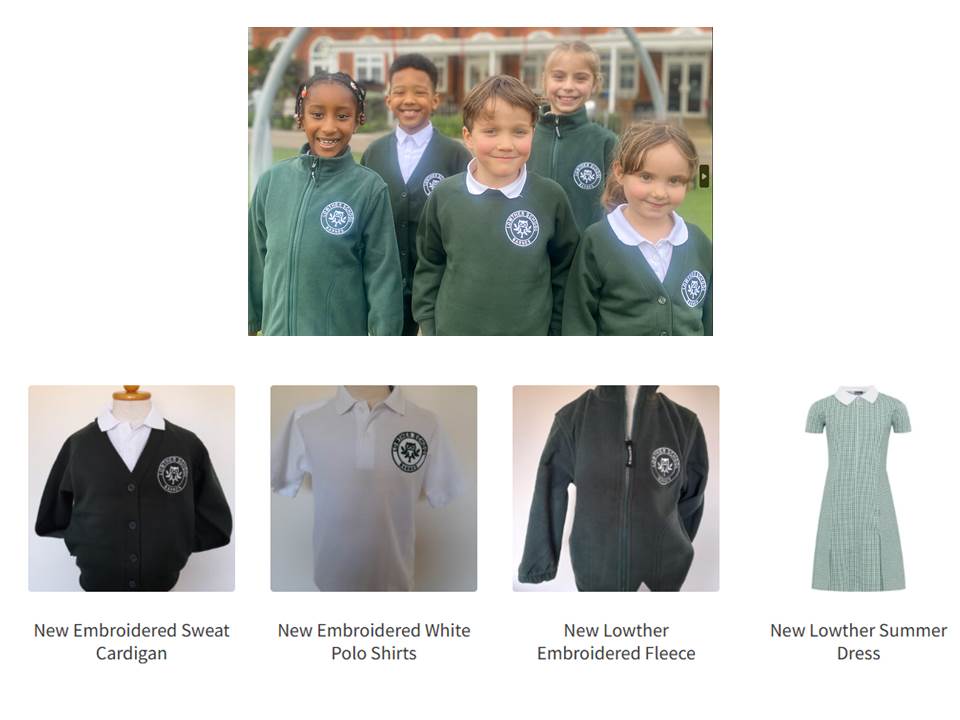
Plain green, white or black uniform is also available from most high street stores.
Terms and Conditions for additional hours at Lowther Nursery
Extended Hours and Fees
We now offer extended hours in our Nursery, dependent on availability of spaces.
Standard provision: 15 hours per week, either 5 mornings (8.45am–11.45am) or 5 afternoons (12.30pm–3.30pm).
Extended provision: An additional 15 hours per week.
Full day places (8.45am–3.30pm) are available. For parents eligible for 30 hours funding, there is an additional charge of £10.00 for lunch club.
Priority is given to: i. Looked After children ii. Children with exceptional family, social or medical need iii. Children with siblings at the school iv. Children living nearest to the school
This is in line with the school admission criteria.
The offer is dependent on parents having a valid 30-hour funding code from HMRC, which must be renewed every 3 months.
Parents not eligible for 30-hour funding may apply for extended hours at £10 per hour plus £10.00 for lunch club.
We also offer limited lunchtime places (11.45am–12.30pm) at a cost of £10.
All extended hours must be booked and paid for in advance each half term. Invoices must be settled by the specified date. The school reserves the right to refuse extended hours if payment is not made.
Children staying for lunch should bring a healthy packed lunch or can purchase a school dinner for £2.80 per day.
To check eligibility for 30-hour funding, visit: https://www.childcarechoices.gov.uk
Nursery Outline
A very warm welcome to Lowther Nursery...
Below you will find an outline of the journey and anticipated progress through the Nursery phase of the Lowther School Family facilities. We hope this provides helpful insight for understanding how a child will gradually learn and develop new abilities and skills during this exciting phase.
Early Years at Lowther School
In Early Years, our aim is to create a learning environment and build relationships which enable children to become confident, creative, and inquisitive members of the Lowther School Family. We strive to create well-rounded individuals who feel valued, have a deep love of learning and are ready and equipped to take on the next step of their learning journey.
During their time with us, we want children to become:
- Competent and motivated learners who are curious about the world around them.
- Secure and resilient individuals who are equipped with problem solving skills and a strong sense of self-belief that enables them to bounce back from challenges and achieve well.
- Skilful communicators who are equipped with a vast and vibrant vocabulary and can connect with others through language.
Children in the Early Years learn in a stimulating and exciting setting, engaging in a mixture of play-based and adult directed activities. Through careful modelling from adults and appropriate challenge within the environment we encourage pupils to play and explore, engage in active learning, and create and think critically. Where possible our children are given the opportunity to learn through first-hand experiences, such as growing their own herbs to use in cooking or observing the hatching and growth of chicks.
Like the rest of Lowther School, we love outdoor learning in Early Years and our children can choose to learn either indoors or outdoors every day. We make the most of our own Nursery and Reception gardens alongside the school allotment, chickens, and wonderful grounds! All Reception children have the opportunity to take part in Forest School sessions before they move into the Key Stage 1 phase.
We work closely together with our parents and carers to provide a safe and happy start to school life, where families feel welcomed and included in their child's learning. We do this through induction sessions, transition stay and play events and home visits. We also have specific times in which parents are invited in to share information with the class about their jobs, talents, cultures or hobbies.
We use an online system called 'Tapestry' to track children's achievements and record 'in the moment' photographs of pupils' learning. All children are observed regularly and learning experiences are then planned to meet the individual needs of children and develop their skills, knowledge and understanding further.
Our Nursery and our Reception classes follow the Early Years Foundation Stage statutory framework, supported by the non-statutory Development Matters. The EYFS educational programmes provide us with the curriculum framework which is then built upon to decide the wider learning content that best fits the interests and needs of our children. The curriculum is sequential, taking small steps and then broadening and deepening learning across a wide range of experiences. We teach a variety of planned topics based around carefully selected language-rich texts or cultural calendar events, and maximise opportunities for child-initiated learning, using the interests of individual pupils as a stimulus.
The Curriculum
- We work from the government statutory curriculum for 0-5 year olds. It has 4 key themes - Positive Relationships, A Unique Child, Enabling Environments and Learning Development.
- Nursery is about developing life long learners and giving children the skills they will need as they go through school.
- Characteristics of effective learning – Playing and exploring – engagement; Active learning - motivation; Creating and thinking critically.
What does this look like?
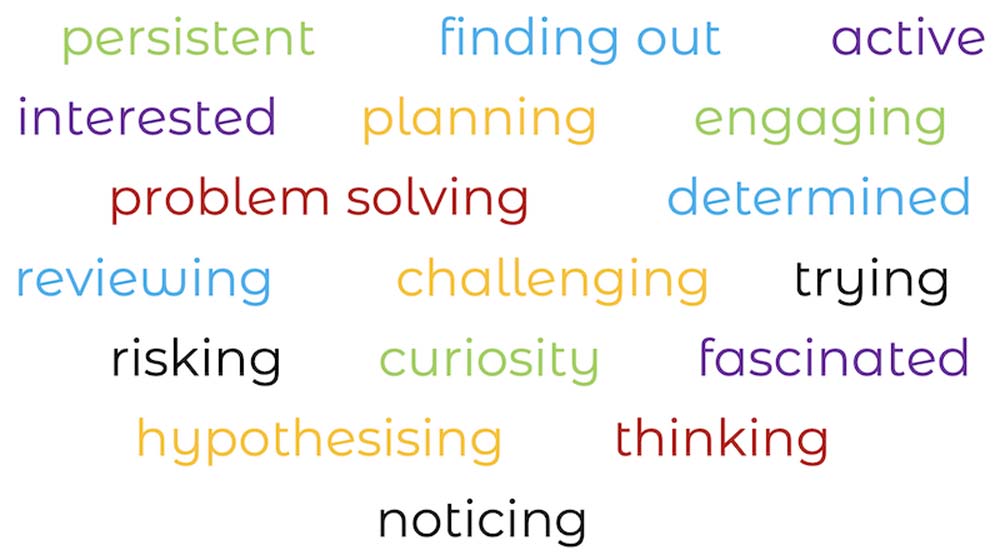
Nursery class work from the Early Years Foundation Stage Curriculum, which sets standards for learning, development and care for children from birth to 5. Within this there are 7 areas of learning: 3 prime areas and 4 specific areas.
Personal, Social and Emotional Development
One of the core areas – without this nothing else could happen. It helps children to be happy, secure, independent and make relationships.
Communication and Language
Links to all other areas and underpins all further learning. Children need to be able to listen, process, understand and communicate.
Physical Development
Central to brain development and underpins later reading and writing. Left to right tracking, first gross motor and then fine motor.
English
- This is divided into Reading and Writing.
- Early reading involves a love of books, understanding of how stories are structured, knowing that print conveys meaning and phonic awareness.
- Early writing involves understanding writing is for a purpose, giving meaning to the marks they write, beginning to write their name and awareness of other letters in the alphabet.